

When should you move to the next car seat? A guide for Australian parents
Posted: August 12, 2026

Knowing when to change your child’s car seat isn’t always as simple as waiting for their next birthday. Children grow at different rates, which means two children of the same age might need different types of child car restraints.
In Australia, age determines the minimum type of approved child restraint your child must use. However, the safest approach is generally to keep your child in their current car seat until they have physically outgrown it. Shoulder height markers, your child’s size and the manufacturer’s instructions are more useful indicators than age alone. You can learn more about the relevant laws, restraint requirements and child car seat safety in our detailed guide.
Knowing what to look for can help you make each transition at the right time for your child. Read this guide to learn all about the signs and what to check before moving your child into a different car seat.
The standard age framework for changing car seats
Australian child restraint laws provide minimum age requirements, while best practice guidelines encourage parents to delay each transition until the child outgrows their existing restraint. The standard age framework used around Australia is broadly as follows, although individual state and territory road rules should always be checked when travelling interstate.
| Child’s age | Minimum restraint requirement | When to consider changing |
|---|---|---|
| 0 – 6 months | Rear-facing child restraint | Do not move forward-facing before 6 months. Keep rear-facing beyond this where the restraint still fits |
| 6 months – under 4 years | Rear-facing restraint or forward-facing child restraint with an inbuilt harness | Move forward-facing when your child reaches the relevant shoulder height marker or maximum size permitted by the seat |
| 4 years – under 7 years | Forward-facing restraint with an inbuilt harness or approved booster seat | Stay harnessed until your child outgrows the forward-facing restraint |
| 7 years and over | Suitable child restraint, booster seat or properly fitting adult lap sash seatbelt | Move out of the booster only when the adult seatbelt fits correctly, and your child passes the 5-step test |
The important point is that these ages are minimum legal thresholds, not deadlines for changing seats.
The importance of shoulder height markers in child car seats
Modern Australian child restraints use shoulder height markers to help parents work out when a child fits a particular mode of the seat. They are great visual guides that tell you when your child is big enough to use the seat. When your child’s shoulders reach or pass the top marker line, they have outgrown that restraint model and should transition according to the seat manufacturer’s instructions.
If your convertible car seat has upper and lower markers, your child should remain in the rearward facing position until their shoulders reach the relevant maximum marker, provided you continue to meet the restraint manufacturer’s instructions. Australian guidance specifically recommends using these markers when deciding when to move to the next restraint type.
Do not turn the seat simply because:
- your child has turned six or twelve months old
- their legs look bent while rear-facing
- another child of the same age is already forward-facing
- they seem bigger than other children their age.
Your child’s shoulder position and the specifications of the current car seat are better indicators.
Moving from a baby capsule to a convertible car seat
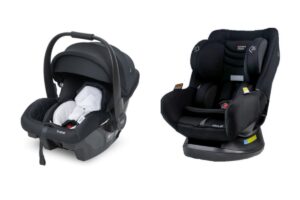
A baby capsule is often your child’s first car restraint. Capsules provide a convenient rearward-facing restraint for newborns and younger babies, particularly because many models can be removed from the vehicle while your baby remains inside.
When your baby outgrows their capsule, the next step will usually be a convertible car seat that continues to be used rear-facing. A convertible car seat gives you the option to use the restraint in both a rearward-facing position and, once your child is ready, as a forward-facing seat with a built-in harness.
Babyroad stocks infant capsules and convertible child car seats designed for different vehicles, lifestyles and stages of growth, so it is worth comparing both the size of the restraint and how well it fits into your particular vehicle before choosing your next seat.
When should your child move to a forward-facing car seat?
Your child can legally use an appropriate forward-facing child restraint from six months of age in many Australian jurisdictions, but only if the restraint is suitable for their size.
Best practice is to keep your child rear-facing for as long as their approved child car seat permits. Once their shoulders reach the maximum rear-facing marker, you can move them into a forward-facing restraint with an inbuilt harness. However, if their shoulders sit below the lowest marker line in the new restraint, they’re too small for that specific model.
Depending on the type of seat you own, this might mean turning your existing convertible car seat around rather than buying another seat immediately.
Booster seats in Australia: when should your child move into one?
When parents search for the correct booster seat age Australia, four years is often the age they find.
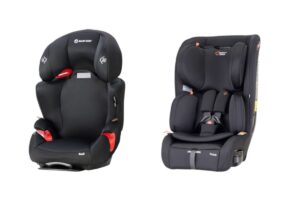
Legally, children from four years to under seven years can generally travel in either a suitable forward-facing child restraint with an inbuilt harness or an approved booster seat. But four is the minimum age at which a booster might be appropriate, not an automatic changeover point.
If your child still fits comfortably and correctly within their forward-facing harnessed restraint, they should generally remain there until they reach the upper shoulder height marker.
A booster seat does not simply make your child taller. It positions the child so the lap belt sits low across the hips and upper thighs and the sash belt passes across the middle of the shoulder rather than the neck or face.
Some older child restraints combine a forward-facing seat with an inbuilt harness and a later booster mode, while other harnessed booster seats allow children to remain internally harnessed for longer. Harnessed booster seats use an inbuilt harness and allow children to remain harnessed for longer, often up to around eight years depending on their height, while a standard booster seat uses the vehicle’s lap-sash seatbelt and is generally suitable from about four years of age.
Adult seatbelt or booster seat? Use the 5-step test
Before removing the booster, sit your child directly on the adult seat of the vehicle and use the five-step test:
- Can your child sit with their back against the vehicle seat?
- Do their knees bend comfortably over the front edge of the seat?
- Does the lap belt sit low across the hips and top of the thighs rather than across the stomach?
- Does the sash belt sit across the middle of the shoulder rather than the neck or arm?
- Can your child stay properly restrained in this position for the whole trip?
Your child should pass all five steps before using an adult lap sash seatbelt without a booster.
This is more useful than relying on a single minimum height or birthday because seat geometry differs between vehicles. A child might fit an adult seatbelt correctly in one car but still require their booster seat in another.
If the adult seatbelt crosses your child’s neck, sits across their abdomen, or they have to slide forward for their knees to bend comfortably, they are not ready yet.
Why moving to the next car restraint too early matters
Every stage of a child car restraint is designed around a child’s developing body. Moving them before they are large enough can reduce how effectively the restraint protects them during a car crash.
For example, an adult lap sash belt designed for a larger body might sit across a smaller child’s abdomen or neck rather than their stronger hips and shoulders. That is why choosing the next seat should be based on your child’s size and fit, not on whether they have reached the minimum legal age.
Moving a child into the next type of car seat too early can also mean they are not being restrained in accordance with child restraint laws. In Western Australia, drivers are legally responsible for ensuring children are properly restrained in a seat that is appropriate for their age, and failing to do so can result in a fine and demerit points.

So, when should you change your child’s car seat?
If you are still wondering when to change your child’s car seat, remember this: move to the next stage when your child has outgrown the protection offered by their current restraint, not simply because they have reached the minimum legal age.
Check your child’s shoulder height against the markers on the seat and make sure the harness and restraint still fit correctly. And when you’re moving your child from a booster to an adult lap sash seatbelt, make sure they pass every part of the 5-step test.
The right restraint also needs to suit your vehicle, your family and the way you travel. At Babyroad, we stock a wide range of baby capsules, convertible car seats, harnessed child restraints and booster seats from leading baby safety brands. Browse our car seat range online, visit our showroom in Booragoon, or get in touch with our team for help comparing options and finding a seat perfectly suited to your child’s next stage.
Frequently asked questions
At what age can a child use an adult seatbelt?
From seven years old, a child can generally use a properly fitted adult lap sash seatbelt. However, they should remain in a booster until the adult seatbelt fits correctly and they pass all five parts of the 5-step test.
Does a child’s height matter more than their age?
Both matter. Age determines minimum legal requirements, while your child’s size helps determine whether a particular restraint still fits safely. Children should generally remain in their current restraint until they reach its maximum permitted shoulder height or other stated size limit.
Speak to our team for an expert opinion on car seat options for your child.
Where should your child sit in the car?
For vehicles with two or more rows, younger children should generally travel in the back seat.
Children under four are generally not permitted in the front seat of a vehicle with more than one row. Children aged four to under seven can generally use the front seat only in limited circumstances, such as when the other rows are occupied by younger children. Specific requirements differ between jurisdictions.
A rear-facing child car seat should never be placed in front of an active passenger airbag.
Can I use a second-hand car seat for my child?
Yes, but only if you know the restraint’s full history and it is still safe to use. Check that it meets the Australian Standard, is less than 10 years old, has never been involved in a crash, has all its original parts and instructions, and has no cracks, damaged straps or faulty buckles. If you are unsure about its history or condition, it is safer not to use it.
